

I recently re-connected with a school friend after a gap of 30 years. Thankfully, we have more in common than memories of wet weekends in the West Midlands. For one, we were both the first in our families to attend university. For another, neither of our fathers attended our graduation ceremonies. In both cases, that absence reflected a difficult relationship that never really improved. For our fathers, it was also something more: an act of protest against our respective decisions to remain in formal education beyond the statutory school leaving age.
The tendency for certain groups both to define themselves and to be defined by their relationship to formal education has been a subject of serious scrutiny for decades. Politicians’ recent focus on working class disengagement from schools gives this work renewed currency. In the early 1980s, the last comparable period of working class alienation from public life in British history, Paul Wills concluded that White working class identity was forged through opposition to schooling. More than a decade later, fellow sociologist Diane Reay ruthlessly dissected the many ways in which schools were more amenable to children from middle class than from working class homes.1
Some this disparity reflects the fact that the middle classes are simply better at bureaucracy. As a serving Head, I’ve often noted how the proliferation in the same neighbourhood of schools with quite different admissions arrangements confuses almost all parents, but confuses professional families slightly less—a dispiriting but real source of comparative advantage when getting your child into the best local school. Middle class parents are also typically able to provide more support for longer with learning that takes place outside of school; an uneven playing field that some educators try to level by the perverse strategy of holding back middle class children so that others can catch up.
Reay’s deeper criticism, however, is that schools are inherently and inescapably middle class institutions. Schools exhibit an “institutional sensibility” that meshes well with that of middle-class families: talk-heavy communication, common assumptions about cultural scripts for success, valorisation of particular forms of parenting, the value they attach to particular types of cocurricular activities and an ability to fund them.
The assumption underlying this thesis is that White working class identity is incompatible with a certain type of education; that, to do well in school, to progress to a university and graduate with an academic degree is to cease to be working class. This is what, in an American context, political scientists Matt Grossman and David Hopkins have termed “the diploma divide”. To be on one side of that divide is to be working class; to be on the other is to be something else. My friend and I know what life looks like from both side of that divide and the personal costs involved in crossing it.
We should not gloss over the ethnic component of this story. In the decades since Reay first published her analysis, university attendance among ethnic minorities has exceeded that of White pupils. The ‘social gradient’ of school achievement, the extent to which it reflects household income, is steepest for White pupils, meaning that the relative representation of White working-class kids at university has actually fallen over this period. The danger exists that White working-class kids will come to perceive educational achievement as incompatible with both elements of their identity. (Add a third, if they happen to be male.)
Class as cultural identity
Reay’s work attracts a fair amount of criticism from academics with differing views on the sociology of knowledge. Much of that discussion is too dense for this summary, but three interwoven lines of critique help shed light on the current political moment and the challenges for our education system. Reay’s work rests on a definition of class that is fundamentally cultural, rather than economic; essential, rather than adaptive; and monolithic, rather than varying over time and, critically, place. None of these conclusions is well supported by the historical record.
The tendency to treat class as a cultural construct reflects the broaden drift towards identitarian politics on both sides of the Atlantic. As journalist Joel Budd has pointed out, figures on the political Right have pivoted from demonizing White working class families for their lack of enterprise and dependency culture to lionising them for their patriotism, traditional family values and instinctive resistance to wokery.
For its part, the political Left, mindful of its own increasingly bourgeois aspect, has taken to invoking its historic origins in White working-class communities and rediscovered sympathy for working class lifestyles. There are complex reasons for both conversions to the white working-class cause, but the impossibility of building an election-winning coalition without them features prominently in both.
The tendency to treat working class communities as implacably anti-intellectual—let’s name the charge for what it is—ignores the substantial evidence of cultural engagement and production by the working class themselves. As American historian Jonathan Rose concluded in his classic study, the English and Welsh working classes were not inert objects to whom education ‘was done’, but active seekers after self-educaton. Miners’ libraries in Durham, Northumberland and in South Wales, tradesmen’s reading circles in London, Birmingham and Manchester, workers’ colleges, even Ruskin College, Oxford—all reflected an appetite for a liberal humanist, rather than a purely technical, education among working people.2
This is to say nothing of the extensive working-class attendance at classical music recitals, participation in choral societies, or the undoubted subtly of much of the folk music produced by and for working class people. As Rose writes:
“If the dominant class defines high culture, then how do we explain the passionate pursuit of knowledge by proletarian autodidacts, not to mention the pervasive philistinism of the British aristocracy?”
It is notable that many of the programmes Rose details were organised and funded by the trades union movement and have steadily eroded along with that movement since the 1980s. But this not a purely historical phenomenon. Education researcher Will Baker discovered in 2014 that working class families routinely exhibited high aspirations for their children, including acknowledging the importance of attending a university. Where they differed from more affluent families was in their belief that they had a fair chance of achieving those aspirations. In the language of sociology, they have lower reserves of “aspirational capital” than those with more inherent advantage. Recent research by The Sutton Trust Into the socio-economic background of professional elites would suggest that scepticism is well-founded.
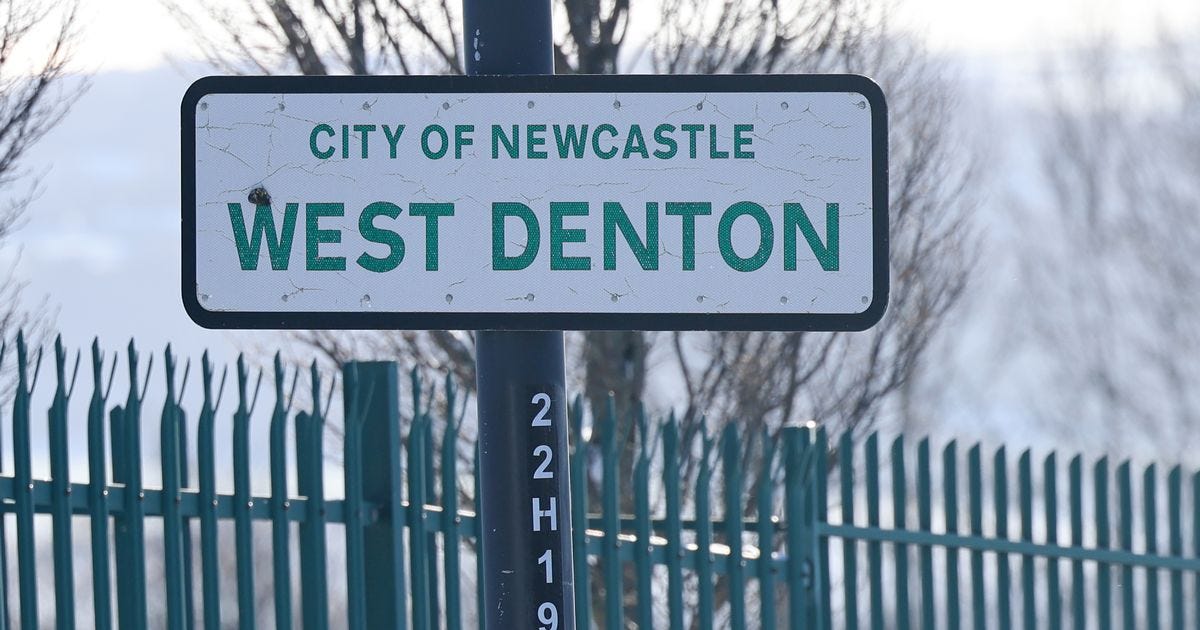
Where you grow up and live also shapes attitudes towards education. Superficially, West Denton in Newcastle, where I’ve had the privilege of working with teachers and students in the past year, and Chelmsley Wood in the West Midlands, where I grew up, look alike and share some of the same challenges. But they are also profoundly different in a host of ways that affect engagement , not least the North-east’s more fragile public transport system and less diversified regional economy. Working class families in Cornish coastal towns have much in common with those living in Manchester suburbs, but also much that makes them different.
None of this is to deny the importance of Reay’s work. Her key insight—“Education cannot compensate for society because it was never set up to do that, any more than it was set up to realise working class educational potential”—is surely correct. Her picture of schools as alien outposts in working class communities and academic study as jarring against working class communities’ sense of themselves speaks to my own experience and, perhaps, that of a great many others. But it does not speak to everyone’s. If the education system is to re-engage White working-class students, it must do so by restoring their sense of belonging in schools and their communities’ sense of ownership over a particular type of learning.
Reay, D. (2017) Miseducation: Inequality, education and the working classes, Bristol University Press; summary here.
Rose, J. (2001) The Intellectual Life of the British Working Classes, Yale University Press
What does it mean that education cannot compensate for society?
Are there schools in challenging circumstances that nevertheless thrive against the odds (societally) stacked against them, and what can we best learn from them?